



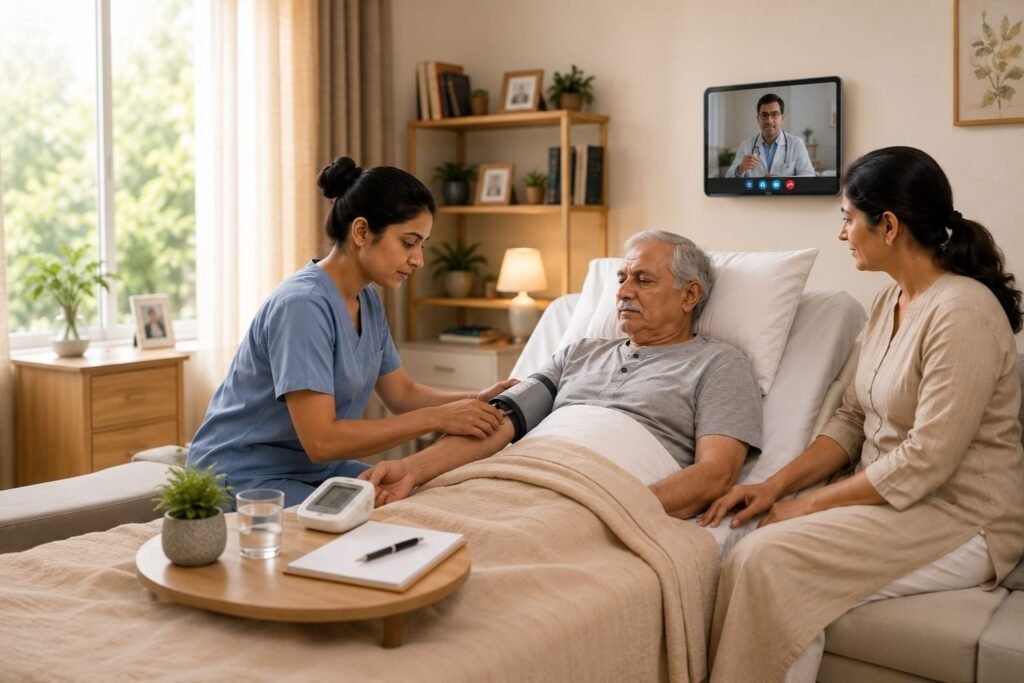
Not too long ago, intensive medical care meant one thing: a hospital bed surrounded by machines and a rotating team of nurses. Today, that’s changing fast. More families are choosing home ICU care as a way to give critically ill patients the same level of monitoring and medical support, but in the comfort and familiarity of their own home. It’s less stressful for the patient, easier on the family, and often more affordable than an extended hospital stay.
If you’re currently researching this option for a loved one, here’s a clear, practical breakdown of what home ICU care actually involves, who benefits most from it, and how to set it up properly.
What Is Home ICU Care?
Home ICU care is essentially the replication of intensive care unit services within a patient’s home. Instead of shifting a critically ill or post-surgical patient to a hospital ICU, a trained medical team brings the equipment, monitoring devices, and clinical expertise to them. This includes continuous vital sign monitoring, ventilator support if needed, IV medication management, oxygen therapy, and round-the-clock nursing supervision — all coordinated under a treating doctor’s guidance.
It’s not a downgrade from hospital care. Done right, home ICU setup can match hospital-grade monitoring while reducing the risks that often come with prolonged hospital stays, like hospital-acquired infections.
Who Actually Needs Home ICU Care?
Home ICU care isn’t for every patient, but it makes a significant difference for several specific groups:
1. Patients Recovering from Major Surgery Post-operative patients who need close monitoring but don’t require a hospital’s full surgical infrastructure anymore are strong candidates. Vital signs, wound care, and pain management can be handled effectively at home with the right setup.
2. Elderly Patients with Chronic Conditions Seniors managing conditions like heart failure, COPD, or advanced diabetes often need continuous monitoring without the disorientation and stress that hospital environments can cause. Home-based intensive care keeps them in a familiar environment, which can genuinely improve recovery outcomes and mental well-being.
3. Ventilator-Dependent Patients Patients who need long-term ventilator support, whether due to respiratory illness or neurological conditions, can be managed at home with a properly equipped ICU setup, trained respiratory therapists, and reliable suction apparatus and nebulizers on hand.
4. Palliative and End-of-Life Care Patients For patients in the final stages of terminal illness, home ICU care allows them to spend their remaining time surrounded by family rather than in a clinical setting, without compromising on pain management or comfort care.
5. Patients with Limited Mobility or Bedridden Conditions Bedridden patients dealing with pressure sores, incontinence, or long-term immobility need consistent care involving items like adult diapers, underpads, and air bed mattresses — all standard components of a well-managed home ICU environment.
How Does Home ICU Care Actually Work?
Setting up home ICU care isn’t just about renting a hospital bed and calling it done. Here’s what a proper setup typically includes:
1. Medical Assessment and Care Planning A doctor or specialist evaluates the patient’s condition to determine whether home care is medically appropriate, then creates a detailed care plan covering medication schedules, monitoring frequency, and emergency protocols.
2. Equipment Setup This is where most of the groundwork happens. A functional home ICU typically needs:
- BP monitors and digital thermometers for continuous vital tracking
- Nebulizers and oxygen concentrators for respiratory support
- Suction apparatus for airway management
- Hospital-grade beds and air mattresses to prevent bedsores
- Infection-control essentials like gloves, masks, and disposable gowns for caregivers
- Underpads and adult diapers for hygiene and comfort management
Sourcing this equipment from a single reliable supplier — rather than piecing it together from multiple vendors — makes ongoing maintenance and reordering far simpler for families and caregiving agencies alike.
3. Trained Nursing and Caregiver Support Depending on the patient’s condition, this could mean a full-time critical care nurse, a rotating shift-based nursing team, or periodic visits from a doctor combined with a live-in attendant. Training on how to handle emergencies is non-negotiable here.
4. Continuous Monitoring and Communication with Doctors Modern home ICU setups often include remote monitoring tools that keep the treating physician updated in real time, so any deterioration in the patient’s condition is caught early rather than discovered too late.
5. Emergency Backup Planning No home ICU setup is complete without a clear plan for emergencies — including a tie-up with a nearby hospital for immediate transfer if the patient’s condition suddenly worsens.
Why Families Are Increasingly Choosing Home ICU Care
Beyond the obvious comfort factor, home ICU care tends to reduce the psychological stress that both patients and families experience in hospital settings. It also lowers the risk of hospital-acquired infections, gives families more direct involvement in caregiving, and is often more cost-effective over extended treatment periods compared to prolonged hospital admission.
That said, its success depends entirely on getting the fundamentals right — accurate medical assessment, dependable equipment, trained caregivers, and a reliable supply chain for consumables like gloves, masks, and hygiene products that need regular restocking.
Final Thoughts
Home ICU care brings hospital-level critical care into the comfort of your home, helping patients recover in a familiar and supportive environment. With the right medical supervision, advanced equipment, and skilled healthcare professionals, it offers a safe alternative to prolonged hospital stays. By choosing GeoCare Healthcare, families gain access to experienced ICU-trained nurses, reliable medical equipment, and personalized care plans, ensuring quality care, comfort, and peace of mind throughout the recovery journey.